
Make it stick

Tips for sustainable home training

These tips emphasize repeatability. Fitness culture often sells intensity; real progress usually looks like boring consistency, smarter defaults, and fewer self-sabotaging “hero days.”

Space: reduce friction

Your environment should argue for training, not against it. That means visible equipment, clear floor space, and a rule about phone placement during sessions.

Setup

Two-square-meter rule

You rarely need more room than a yoga mat plus one step in each direction for most bodyweight patterns. If your area is tight, pick variations that fit—split squats instead of walking lunges, incline push-ups on a bench or sturdy table with care.
Air & light

Ventilation and visibility

A slightly cooler room can improve focus; good lighting reduces missteps when you are tired. If you train at night, warm up longer—tissues stiffen with long sedentary stretches.

Sound

Audio as pacing

Use a playlist with tempo that matches your session intent—calm for mobility, steady for strength circuits. Avoid constantly checking messages between sets; that fragments attention and stretches rest unintentionally.

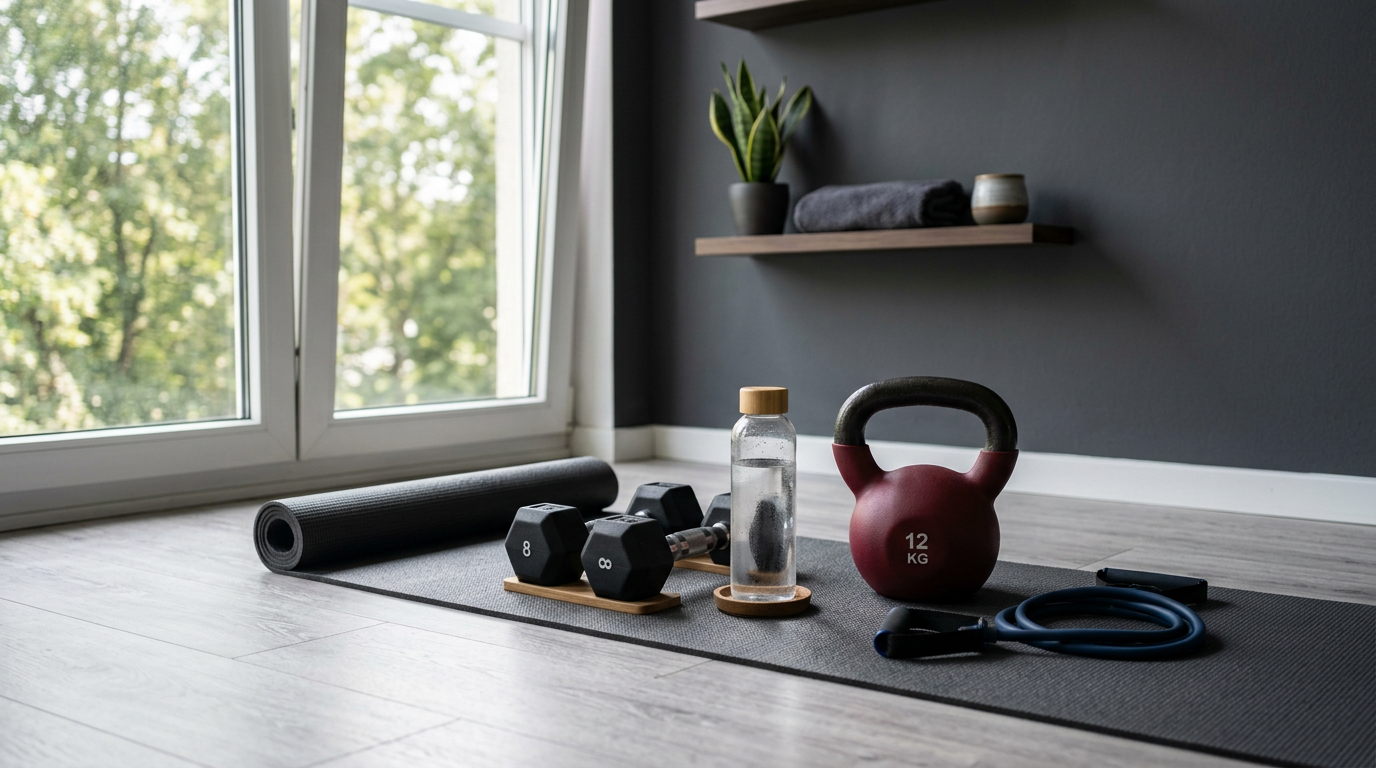
Organized home corner for workouts
Visibility matters: out of sight often means out of mind.

Progression without ego

Progress is not linear. Track inputs—sets, reps, tempo, range—and note qualitative cues like “knees tracked” or “smooth exhale.” When numbers stall, change one variable at a time.

1

Add time under tension

Three-second lowers and brief pauses increase demand without changing exercises. Great when joints feel cranky with new movements.

2

Improve range at same load

Bodyweight work rewards deeper, controlled ranges. Film from the side occasionally to spot hip hinges that look like squats or push-ups that shorten at the bottom.

3

Rotate variations

After several weeks, swap grips or stance widths to build resilience and reduce overuse irritation—always introduce changes gradually.

Recovery-aware training

Sleep and stress influence performance. If you feel run down, consider reducing volume before you reduce frequency—keeping the habit while lowering cost. This is general wellness education, not medical advice.

Yellow light days

Shortened session, technique emphasis, no grinders. Walk afterward to reset your nervous system gently.

Red light signals

Sharp pain, joint instability sensations, or symptoms that concern you warrant pausing and consulting a qualified clinician—not pushing through for mindset points.

Nutrition basics

Most adults benefit from adequate protein and hydration for training recovery broadly speaking; specifics depend on your health context—ask a registered professional for individualized guidance.

Explore articles for longer reads and weekly plans to align structure with these tips.